Using Adjustable Yokes on Load Turners for Varied Workpiece Sizes
Handle different workpiece sizes smoothly with an adjustable clamping yoke on a chain type load turner—better balance, faster changeovers, and steady rotation.
In real fabrication shops, stamping plants, and foundries, rarely are two workpieces identical. One batch may be a short, compact mold or casting, while the next is a longer steel beam, a wider structural frame, or a thicker metal component. When handling mixed batch sizes with a load turner, relying on a fixed-spacing setup can quickly slow down workflow or create balance issues during rotation.
That is why an adjustable clamping yoke is such a practical feature on a chain type load turner. Instead of forcing every part into a rigid single spacing or buying separate turning rigs for every batch size, an adjustable yoke lets operators adapt the support and clamping geometry to match different workpieces.
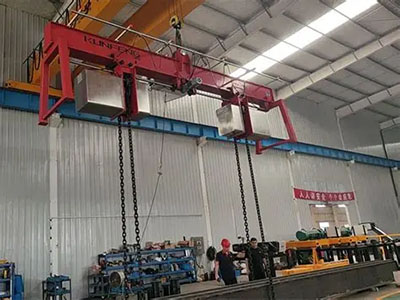
Why Mixed Workpiece Sizes Challenge Standard Turning Setups
When workpieces vary in length, width, thickness, or profile, three common problems show up on the shop floor:
Shifted Center of Gravity: Uneven weight distribution can cause tilting, swing, or extra stress on lifting rigging if the load is not centered properly.
Awkward Rigging and Repositioning: If yoke spacing does not fit the part's span or contact points, crews often spend extra time adjusting slings or re-hooking on the crane.
Inconsistent Rotation Stability: A chain type load turner uses synchronized chain transmission and controlled rotation (such as 0°–360° movement with VFD speed control) to keep heavy parts steady, but proper yoke span and load balance remain essential before turning begins.
How an Adjustable Yoke Helps Adapt to Different Sizes
An adjustable clamping yoke with variable spacing or interval settings helps bridge the gap between different batches in a practical way:
Better Span & Contact Fit: Operators can adjust the yoke spacing to suit narrower or wider workpieces, supporting more even contact rather than forcing awkward angles.
Faster Batch Changeovers: When switching from one workpiece size to another in daily production, adjustable spacing reduces setup friction compared with fixed-span fixtures.
Practical Handling on Heavy Units: Because heavy yokes carry substantial weight of their own, adjustment is typically done manually or assisted by lifting equipment/hoists depending on the unit design and shop workflow.
What to Check Before Selecting or Adjusting a Yoke
If your workshop handles multiple workpiece sizes with a chain type load turner, keep these practical checks in mind:
1. Min. and Max. Workpiece Dimensions: List the smallest and largest lengths, widths, and profiles your team actually turns.
2. Weight Range and Center of Gravity: Check how weight and balance shift across different parts within your 1t–50t capacity range.
3. Crane Hook & Clearance: Confirm single-horn or double-horn hook compatibility along with workshop lifting height and headroom.
4. Custom Configuration Needs: If your parts have unusual shapes, wide size swings, or non-standard dimensions, share drawings early so engineering can verify spacing and load stability.
With an adjustable clamping yoke, a chain type load turner adapts smoothly to different workpiece sizes while keeping rotation steady and controlled. Check the full specifications and load ratings for our chain type load turner, or share your workpiece dimensions for a tailored option.
Popular Products

Chain Type Load Turner for Safe & Controlled 360° Rotation
Load Turning Device
Belt Electric Overhead Crane for Semiconductor Industry
Cleanroom Cranes